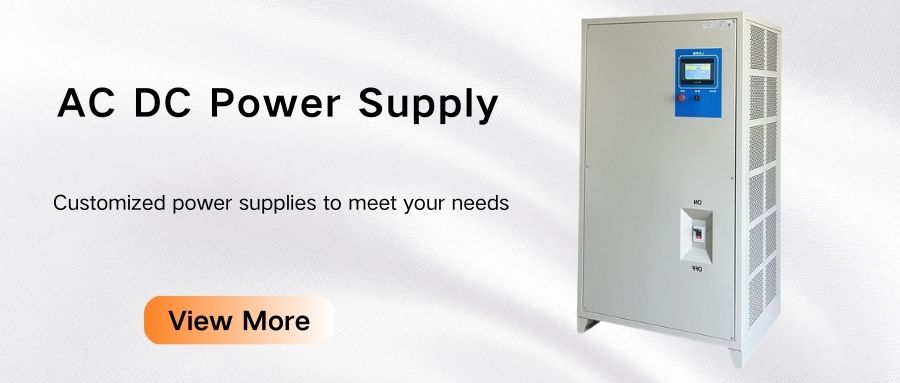
Before Power-On: Safety Pre-Check and Basic Verification
The stable operation of a three-phase adjustable power supply starts with every detail check before power-on. The core of this stage is to eliminate hardware hidden dangers and lay a foundation for subsequent debugging. First, it is necessary to verify the input grid parameters to ensure that the three-phase incoming line voltage and frequency are consistent with the rated values of the equipment. Over-voltage power-on is strictly prohibited, as it will cause over-voltage breakdown of power devices. At the same time, the grounding system must be checked. The chassis must be reliably connected to the protective ground wire (PE), and the grounding resistance should be controlled within 4Ω. This is a key line of defense to prevent electric shock and suppress electromagnetic interference.
In the wiring link, the terminal labels must be strictly corresponding. The input terminals (A, B, C) and output terminals (a, b, c) shall not be misconnected, and the star neutral point (O) shall be connected in accordance with the specifications. The cable specification shall match the rated current. It is recommended to use a copper core wire with sufficient wire diameter, and the connectors must be tightened to avoid heating or fire caused by excessive contact resistance. In addition, for new equipment or equipment that has been idle for a long time, an insulation test is required. A 500V megohmmeter can be used to detect insulation performance. If necessary, heat-drying treatment is performed. After confirming that there are no loose fasteners, it can be put into use.
During Debugging: Parameter Accuracy and Operation Specifications
The debugging process is the key to the performance of the three-phase adjustable power supply. Operational specifications directly determine the service life and testing accuracy of the equipment. Before starting, be sure to adjust the output voltage to the zero position, and adopt the principle of "zero power-on and slow voltage boost" to avoid impact caused by sudden voltage application. During adjustment, closely observe the three-phase output waveform to ensure a pure sine wave. The total harmonic distortion (THD) is recommended to be controlled within 3%. If the waveform is distorted, check the filter module or power devices.
For scenarios with three-phase unbalanced loads, it is necessary to enable the adaptive balance function of the three-phase adjustable power supply, monitor the three-phase current in real time to ensure the difference is within a reasonable range, and prevent overheating caused by overloading of one phase. Frequency adjustment shall follow the process requirements. The conventional industrial scene is mostly in the 45-65Hz range, and the high-precision testing scene can be refined to 0.01Hz resolution. At the same time, multiple protection functions must be verified, including over-voltage, over-current, short-circuit, over-heat, etc. When a fault is simulated, the equipment should automatically cut off the output and alarm. Under the condition of high voltage and high current output, it is strictly forbidden to shut down or reset directly. Turn off the signal output first, then cut off the main power supply.
Operation and Maintenance: Long-Term Operation and Detail Management
After the equipment is in stable operation, daily maintenance and detail management are the core to ensuring long-term reliability. The operating environment should be kept ventilated and dry, away from heat sources, dust and corrosive gases. It is recommended to reserve more than 10cm of heat dissipation space, and the protection level should not be lower than IP54. Regularly clean the dust and oil inside the equipment, focus on checking the cooling fans, brushes and wiring terminals to prevent poor heat dissipation or poor contact caused by dust accumulation.
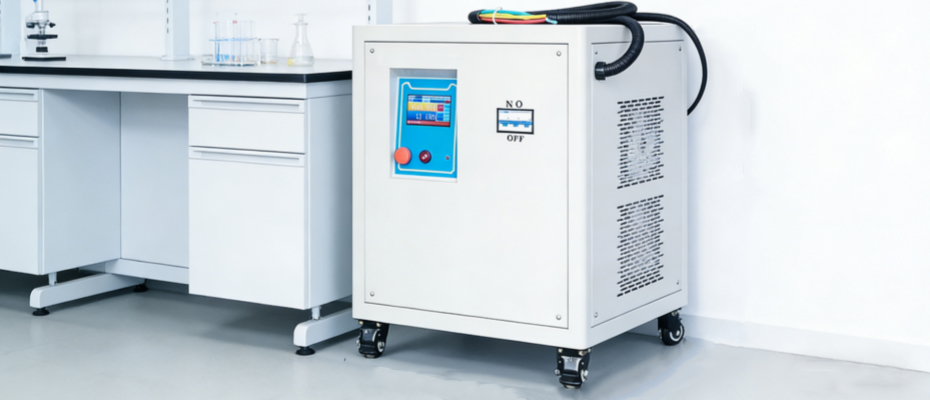
The long-term stability of the three-phase adjustable power supply depends on regular parameter calibration and status monitoring. It is recommended to record the key data such as output voltage, current, and ripple coefficient every month, compare and analyze the change trend. If the ripple coefficient exceeds 1.5% or the output accuracy decreases, calibration is required. For equipment with strong load capacity, it is necessary to regularly test the impact resistance to ensure that it can withstand 2-3 times the rated current short-time impact. In addition, non-professionals are strictly prohibited from disassembling the machine by themselves, as there are high-voltage components inside, and maintenance must be operated by certified personnel.
In specific selection and application, YIBENYUAN's three-phase adjustable power supplies have outstanding performance in three-phase decoupling control and anti-interference design, which can adapt to multi-scene needs such as laboratory research and development, industrial aging testing, and provide a reliable solution for accurate voltage control.
Emergency Handling: Fault Troubleshooting and Risk Avoidance
If an abnormal alarm occurs during operation, take immediate power-off measures and do not operate with faults. Common faults such as over-current tripping are mostly caused by load short-circuit or excessive starting current. Troubleshoot the load fault first before restarting the power supply; over-heat alarm is mostly related to poor heat dissipation and over-load. Stop the machine to clean the heat dissipation system and reduce the load power. For voltage abnormalities, check whether the three-phase input is balanced and whether the filter capacitor is invalid. For unstable current, check the contact of wiring terminals and load matching degree.
Emergency handling shall follow standardized procedures. After fault elimination, no-load trial operation is required to confirm that the parameters are normal before putting into load. At the same time, a fault record file should be established to count the types and frequencies of faults, optimize operation and maintenance strategies targetedly, reduce the fault incidence from the root cause, and ensure the long-term stable operation of the three-phase adjustable power supply.
YIBENYUAN Power Expert:
We customized input and output voltage and current, our offerings range from 0V to 2000KV DC and 0A to 20000A. We provide AC-DC solutions for the motor category or electrical appliances testing or Lab testing, electrochemistry, electrolysis, electroplating, and anodizing.
Thank you for considering our services.