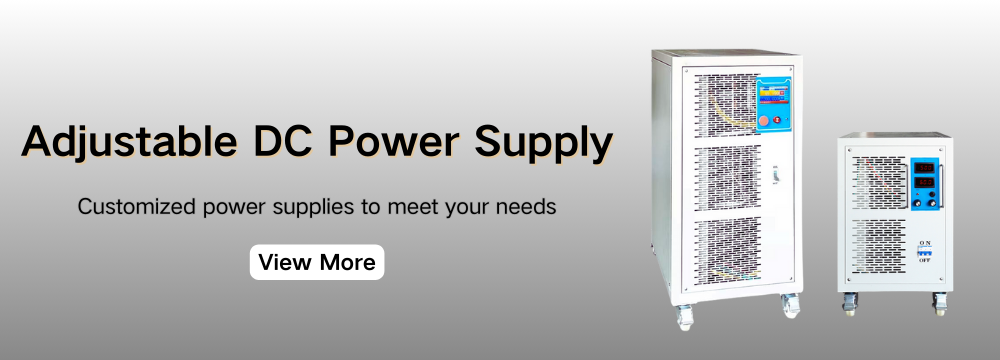
Adjustable power supplies are core power supply equipment in industrial production and laboratory testing. Their lifespan directly impacts equipment investment costs, production stability, and maintenance efficiency. Many industrial professionals encounter this problem: some adjustable power supplies of the same model can last 5-8 years, while others fail or experience performance degradation in less than two years, or even become completely inoperable. In fact, the lifespan of an adjustable power supply is not fixed, but is influenced by multiple factors, and most of this wear and tear can be mitigated through scientific methods. Today, we will analyze in detail the key factors affecting the lifespan of adjustable power supplies and the corresponding mitigation techniques to help you extend equipment lifespan and reduce maintenance costs.
The first core influencing factor: improper working environment. This is the most common and easily overlooked cause of damage in industrial settings. The internal core components of adjustable power supplies (such as capacitors, chips, and transformers) have high environmental requirements. Excessively high or low temperatures, excessive humidity, dust accumulation, and strong electromagnetic interference will accelerate component aging. For example, if an industrial workshop is in a high-temperature environment for a long time, insufficient heat dissipation inside the power supply will lead to capacitor bulging and chip overheating damage, directly shortening its lifespan; while humid and dusty environments can cause internal circuit short circuits and poor contact, also leading to equipment failure. In addition, adjustable power supplies near equipment such as frequency converters and welding machines will be subject to strong electromagnetic interference, leading to internal circuit malfunctions, which will exacerbate component wear and tear over time.
Strategies to mitigate environmental impacts are marked by strong practicality and low costs, with three core steps to implement consistently:First, optimize the installation layout. Second, regulate the ambient temperature and humidity. Maintain workshop temperatures within a range of 10 to 35 degrees Celsius and relative humidity at 40 to 70 percent..Third, fit protective housing. For adjustable power supplies operating outdoors or in harsh conditions, install dedicated protective enclosures to prevent dust and moisture from infiltrating the internal components.
Next comes a second key contributing factor: improper operation and human error are leading causes of sudden malfunctions in adjustable power supplies. Many users adopt non-standard operating practices, including random output gear switching, frequent power on/off cycles, and operation under no-load or overload conditions.For example, switching voltage and current gears without cutting off the power supply can trigger an abrupt current surge in the internal circuit, damaging switching components. Frequent start-stop operations accelerate wear on capacitors and transformers, shortening their service life. Prolonged overload operation—when output current and power exceed rated values—subjects the power supply’s internal parts to sustained high loads, doubling the rate of overheating and aging, and in severe cases, causing direct equipment burnout.Furthermore, incorrect wiring (e.g., reverse connection of positive and negative terminals) can instantly damage internal chips, resulting in irreversible device failure.
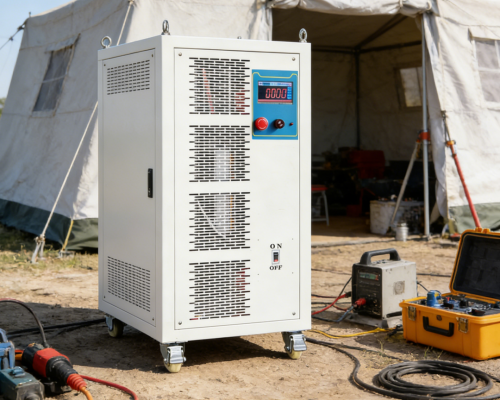
Standardized operation is the cornerstone of preventing human-caused damage, and compliance hinges on three simple golden rules:
First, follow the operation manual strictly for all power start-stop and gear-switching procedures. Always turn off the output switch before adjusting gears, and wait for the power supply to reach full stability before modifying any parameters.Second, avoid overload and prolonged no-load operation. Clarify the equipment’s rated power and current specifications before use, and configure a matching load to prevent continuous operation outside the rated range. Minimize no-load operation time as much as practicable.Third, ensure correct and secure wiring. Inspect positive and negative terminals thoroughly before wiring, confirm all connecting cables are intact and firmly fastened, and eliminate risks of poor contact or incorrect wiring. Only power on the unit and conduct testing after verifying the entire wiring setup is complete and correct.
A third critical influencing factor is inadequate routine maintenance. A common misconception among many users is that adjustable power supplies “work fine just by plugging in, and only need repairing when broken”—this neglect of daily upkeep causes minor issues to accumulate and escalate into major failures.Failing to clean heat dissipation vents and inspect connecting wires regularly leads to poor heat dissipation and contact faults. Neglecting regular output parameter testing means performance degradation from component aging goes undetected in a timely manner, further worsening equipment damage. What’s more, prolonged idling of power supplies without robust dust and moisture protection can lead to oxidation and moisture absorption in internal components, rendering the unit highly vulnerable to malfunction when returned to service.
Routine maintenance isn’t complicated at all—you just need to stick to three simple tasks on a regular basis:
Scheduled cleaning: Wipe down the outside of the power supply and clear out dust from the cooling vents every 1 to 2 months. Use a hair dryer on the cool setting to blow away built-up dust—never use a damp cloth on the internal parts.
Doing maintenance is really not that hard. You just have to do a things over and over. There are three things you should do all the time:
Scheduled cleaning: Wipe down the outside of the power supply and clear out dust from the cooling vents every 1 to 2 months. Use a hair dryer on the cool setting to blow away built-up dust—never use a damp cloth on the internal parts.
Regular performance checks are important. We need to do these checks every three months. When we do these checks we have to make sure the power supply is working correctly. We have to check the output voltage and current of the power supply. This is to catch any fluctuations, in the power supply. If the power supplys output voltage and current are not accurate we have to look into it. The power supplys parameters should be just right. If any of the power supplys parameters are acting up we need to fix the power supply away. This is because the power supply is an important part of the system and it needs to be working properly at all times.
Maintenance when the adjustable power supply is not, in use: If you are not using the power supply for a long time turn the adjustable power supply on for 30 minutes each month to keep the internal parts of the adjustable power supply active and prevent oxidation of the adjustable power supply.
Also make sure the adjustable power supply is properly protected from dust and moisture the time the adjustable power supply is sitting idle.
To keep it simple: 30% of an adjustable power supply’s lifespan depends on its own quality, and the other 70% depends on how you use and take care of it. If you use it in the wrong environment, don’t use it properly, or skip regular maintenance, it’ll die out much faster and its parts will wear down quicker.However, with some common sense and careful maintenance, these problems are entirely avoidable. By controlling the operating environment, following standard operating procedures, and performing regular maintenance, the lifespan of adjustable power supplies can be extended, ensuring stable operation and significantly reducing long-term maintenance costs.