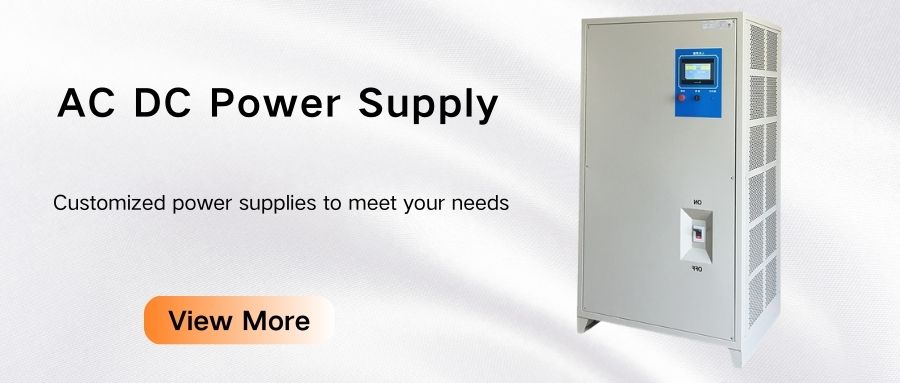
As a core component in industrial heating and laboratory temperature control applications, the rationality of an electric heating power supply's technical parameters directly determines the heating effect and equipment stability. Understanding these key parameters not only helps in accurate selection but also improves efficiency and reduces energy consumption. The following analysis focuses on the core dimensions.
Electrical Parameters: Laying the Foundation for Operation
Output power is a core indicator of an electric heating power supply, directly related to heating speed and load adaptation capabilities. Different applications have significantly different power requirements; industrial melting requires hundreds of kilowatts of high-power output, while small laboratory heating equipment only needs a few kilowatts. A 20%-30% power margin should be reserved to handle fluctuations in operating conditions.
Input voltage and operating frequency are also crucial. Common input voltages are single-phase 220V and three-phase 380V, which must match the on-site power supply conditions to avoid equipment failure due to voltage incompatibility. The operating frequency affects the heating depth; high frequency is suitable for surface hardening, while low frequency is more suitable for through-heating of workpieces. The frequency adaptation range of the electric heating power supply directly determines the breadth of its application scenarios.
Performance Control Parameters: Ensuring Precise Operation
Regulation accuracy is a core performance indicator of an electric heating power supply, including the control accuracy of power, voltage, and current. High-precision equipment can control errors within 0.1%, meeting the high temperature stability requirements of precision processing and material research.

The diversity of control modes is also indispensable. Mainstream electric heating power supplies support three basic modes: constant power, constant voltage, and constant current. Some high-end equipment also features multi-segment process curve programming functions, enabling constant temperature control through PID regulation, adapting to complex heating processes. YIBENYUAN's electric heating power supplies, for example, meet the practical application needs of various industries in terms of parameter stability and control flexibility.
Safety and Adaptation Parameters: Ensuring Long-Term Use
Comprehensive protection functions are essential for the stable operation of electric heating power supplies. They should include basic protection against overcurrent, overvoltage, overheating, and water shortage. Some industrial-grade equipment also includes phase loss and load short-circuit protection to prevent sudden failures from causing equipment damage or safety hazards.
The cooling method and protection rating must be matched to the operating environment. High-power electric heating power supplies typically use water cooling to ensure temperature control during continuous operation, while low-power equipment can use air cooling for simplified maintenance. The protection rating should be selected based on on-site conditions such as dust and humidity. Industrial workshops usually require an IP54 or higher rating to withstand environmental influences.
Summary
The parameter selection of electric heating power supplies must consider specific application scenarios, comprehensively considering load characteristics, process requirements and operating environment, so as to give full play to equipment performance. Reasonably grasping these core parameters can not only avoid selection mistakes, but also extend equipment service life and reduce operating costs.
YIBENYUAN Power Expert:
We customized input and output voltage and current, our offerings range from 0V to 2000KV DC and 0A to 20000A. We provide AC-DC solutions for the motor category or electrical appliances testing or Lab testing, electrochemistry, electrolysis, electroplating, and anodizing.
Thank you for considering our services.