In decorative electroplating, surface appearance is a critical quality requirement. Differences in brightness, color uniformity, coating thickness, or surface finish can lead to rejected parts, rework, and additional production costs.
Although plating chemistry, pretreatment, bath temperature, electrode arrangement, and process control all influence the final result, the DC power source is another important factor to evaluate.
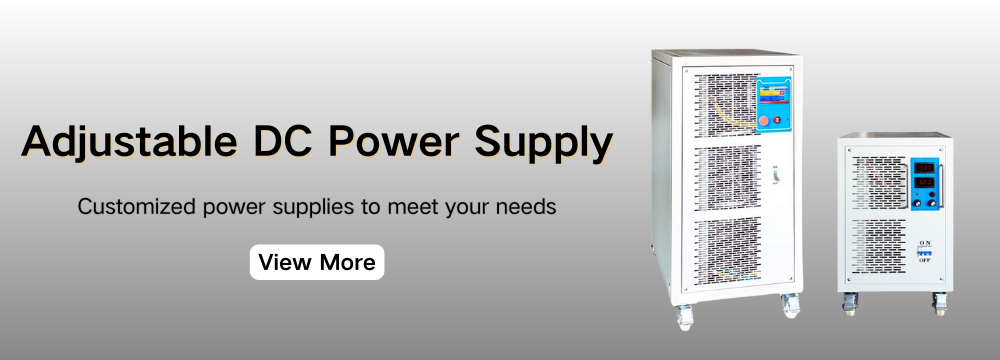
Anadjustable DC power supply allows operators to set the required output voltage or current for a defined electroplating process. When the application requires consistent decorative finishes, output ripple and load regulation may also deserve close attention.
A low-ripple rectifier can help reduce electrical variation under suitable operating conditions. However, low ripple alone does not guarantee a defect-free coating. Its value depends on the plating process, the required current density, the workpiece geometry, and the performance of the complete production system.
For manufacturers evaluating a new rectifier or replacing an existing unit, the decision should therefore be based on measurable electrical performance, application compatibility, and testing evidence—not simply the product name or rated output power.
This guide explains how to evaluate an adjustable DC power supply for a precision decorative electroplating line and what buyers should confirm before approving a supplier.
Industry Pain Points
1. Surface Quality Variation
Decorative electroplating often requires a consistent visual appearance across multiple workpieces and production batches.
Uneven brightness, color variation, roughness, or coating defects can result from several factors, including:
·Inconsistent surface preparation
·Changes in bath chemistry or temperature
·Incorrect current density
·Uneven workpiece positioning
·Poor electrical contact
·Inadequate process timing
·Variation in the rectifier's output
The rectifier should be evaluated as one part of this process. If its output varies excessively under the actual load conditions, it may contribute to process inconsistency. Nevertheless, the root cause of a plating defect should be established through process and electrical measurements rather than assumed to be the power supply.
2. Output Ripple and Regulation
Output ripple refers to periodic variation superimposed on the DC output. Its magnitude and characteristics depend on the rectifier topology, switching or line frequency, filtering, load conditions, and measurement method.
In sensitive electroplating processes, excessive ripple may affect the electrochemical conditions at the workpiece surface. The degree of impact varies with the plating chemistry and operating parameters.
Buyers should distinguish between three specifications:
·Ripple: The AC variation present on the DC output.
·Voltage regulation: How closely output voltage is maintained as input or load conditions change.
·Current regulation: How closely output current is maintained under specified operating conditions.
·These are related but different performance characteristics. A low-ripple specification cannot substitute for clear voltage and current regulation requirements.
3. Production Downtime and Rework
When the power source does not match the process requirements, operators may spend time adjusting parameters, repeating test runs, or investigating defects.
Potential consequences include additional inspection, material rework, production delays, and increased energy or labor costs.
Before replacing a rectifier, buyers should document the existing process conditions and identify which electrical parameters need improvement. This helps prevent unnecessary equipment changes when the underlying problem is actually related to bath chemistry, contact resistance, or workpiece preparation.
4. Unclear Technical Specifications
A quotation that lists only maximum voltage, maximum current, and total power does not provide enough information to assess suitability for precision plating.
Buyers should also clarify ripple measurement conditions, adjustment range, operating mode, duty cycle, cooling, protection, and factory acceptance criteria.
These details are particularly important when evaluating customized rectifiers for an existing production line.
Working Principle: How a Low-Ripple Rectifier Supports Electroplating
An industrial adjustable DC rectifier converts AC input power into controlled DC output for the plating process.
A simplified conversion path is:
AC Input → Rectification / Power Conversion → Filtering → Regulation and Control → DC Output
The exact architecture depends on the rectifier design. Filtering reduces unwanted output variation, while the regulation and control system adjusts voltage or current to meet the required operating conditions.
In electroplating, the required electrical operating point depends on the process.
Some applications primarily control current to maintain a defined current density. Others require a specified voltage range or a particular voltage/current operating profile.
The correct control mode should be determined by the plating process rather than selected solely for convenience.
Why Low Ripple Matters
A low-ripple design aims to reduce unwanted periodic variation in the DC output.
To assess this performance properly, buyers should ask:
·Is ripple specified as peak-to-peak voltage, RMS voltage, or another defined metric?
·At what output voltage and current was it measured?
·Was the measurement taken with a resistive load or an actual process-related load?
·What measurement bandwidth and instrument setup were used?
·Does the specification apply across the full adjustment range or only at a particular operating point?
·Without these conditions, two suppliers may quote ripple figures that are not directly comparable.
For a decision-stage purchase, the most useful specification is one that connects the performance value to a documented measurement method and acceptance criterion.
Selection Guide: Comparing Rectifier Options
The following table provides a practical framework for evaluating power supplies for decorative electroplating.
Selection Factor | General-Purpose DC Supply | Standard Industrial Rectifier | Low-Ripple Adjustable Rectifier |
Output adjustment | Depends on model | Application dependent | Defined adjustment range |
Current capacity | Usually application limited | Industrial ratings available | Selected for process requirements |
Ripple performance | Must be verified | Must be verified | Explicitly specified and tested |
Constant-current operation | Model dependent | Common option | Can be specified where required |
Continuous operation | Check duty rating | Check rated operating conditions | Confirm against the intended process |
Cooling | Model dependent | Industrial cooling options | Selected for power and thermal conditions |
Process integration | May require adaptation | Depends on configuration | Can be specified for the line |
Acceptance testing | General product tests | Project dependent | Project-specific electrical criteria can be agreed |
A low-ripple rectifier is not automatically necessary for every decorative plating line. The decision depends on process sensitivity, existing equipment performance, quality requirements, and the cost of defects.
Key Parameters Buyers Should Confirm
Before requesting a quotation, prepare the following information:
1.AC input voltage and phase
2.Required DC output voltage range
3.Required output current and power
4.Constant-voltage or constant-current operating requirements
5.Required ripple limit and measurement method
6.Continuous operating duration and duty cycle
7.Plating chemistry and process conditions relevant to power selection
8.Cooling and installation environment
9.Local control, remote control, or communication requirements
10.Protection requirements
11.Quantity and expected production demand
12.Target delivery market and applicable compliance requirements
If the existing rectifier is producing inconsistent results, include the current unit's specifications and any available measurements. This makes it easier to determine whether a new power supply is likely to address the identified issue.
Technical Solution: Configuring an Adjustable DC Power Supply
For a precision electroplating project, Yibenyuan can discuss the required configuration based on the customer's application and electrical specifications.
The objective is to establish a clear relationship between process requirements, power-supply capabilities, and acceptance testing.
Electrical Configuration
The engineering review should confirm the required voltage, current, power, adjustment range, and control mode.
For applications that require low ripple, the target value should be defined together with its measurement conditions. Buyers should also clarify whether the ripple requirement applies at full load, partial load, or across a wider operating range.
Cooling and Continuous Operation
High-current rectifiers generate heat. Cooling capacity and installation conditions can affect long-term operation and electrical performance.
The required cooling arrangement should be evaluated against the output power, ambient temperature, ventilation, duty cycle, and available installation space.
Protection and Integration
Depending on the project, requirements may include over-voltage protection, over-current protection, short-circuit protection, over-temperature protection, local indicators, remote adjustment, and external control interfaces.
Not every project needs every function. The final configuration should follow the operating environment and system requirements.
Verification Before Shipment
A project-specific factory test plan can include:
Output voltage and current verification
Ripple measurement under agreed conditions
Voltage and current regulation checks
Protection-function checks
Temperature or continuous-operation evaluation, where specified
Control and interface verification
Protection-function checks
Temperature or continuous-operation evaluation, where specified
Control and interface verification
The acceptance criteria should be agreed upon before production. This allows the buyer to evaluate the delivered unit against the same requirements used during supplier selection.
For a customized rectifier, technical documentation should identify the tested configuration and the conditions under which the results were obtained.
Application Case: Precision Decorative Electroplating Line
Consider a decorative electroplating manufacturer reviewing an existing rectifier because the production team has observed variation in finished surface appearance.
Before replacing the power source, the engineering team should investigate the complete process. Relevant checks may include bath conditions, pretreatment, workpiece contact, current density, operating time, and the electrical output delivered by the existing rectifier.
If testing indicates that output ripple or regulation is outside the process requirements, a low-ripple adjustable DC power supply may be considered.
A structured evaluation could follow this sequence:
Existing Process Review → Electrical Measurement → Requirement Definition → Rectifier Selection → Sample or Pilot Testing → Production Approval
During the evaluation, the manufacturer can record:
Output voltage and current
Ripple under defined operating conditions
Current density and plating time
Coating thickness, where measured
Surface appearance according to the factory's inspection method
Rework or rejection rate before and after the controlled trial
These measurements help establish whether the selected rectifier contributes to an improvement under actual production conditions.
No customer-specific test records or verified before-and-after measurements were provided for this article. Therefore, a quantified reduction in defects, rework, or operating costs should not be claimed without supporting data.
For decision-stage buyers, a controlled trial with documented acceptance criteria is more useful than an unsupported promise of improved plating quality.
When evaluating a project, buyers can contact an Yibenyuan engineer with the current electrical specifications, observed process issue, required ripple limit, and operating conditions to discuss a suitable configuration.
Technical Documentation and Supplier Evaluation
The product itself is only one part of the purchasing decision.
Before approving a supplier, buyers should verify that the technical documents correspond to the proposed model and configuration.
Useful documents may include:
·Electrical specifications
·Outline drawing and connection details
·Applicable certification documentation
·Factory test records
·Operating instructions
·Maintenance information
·Packaging and delivery documentation
Any certification or compliance statement should be checked against the actual product, model, applicable standard, and intended market.
For repeat orders, buyers should also establish how the approved configuration is recorded and how changes are communicated.
This is particularly important when the rectifier is integrated into a production line and must remain compatible with existing electrical and process controls.
A clear technical review, defined acceptance criteria, and documented sample evaluation help buyers make a more informed final purchasing decision.
Selecting a low-ripple rectifier for a precision decorative electroplating line requires more than comparing rated voltage and current.
Buyers should define the required output range, ripple measurement conditions, regulation performance, operating duration, cooling, protection, and integration requirements. They should also confirm that the electrical requirements address an identified process need.
An adjustable DC power supply with documented, application-relevant performance can support a more controlled electroplating process when correctly specified and integrated. However, coating quality remains dependent on the complete electrochemical process.
Yibenyuan can discuss customized DC power requirements based on your application, electrical specifications, operating conditions, and testing criteria.
To evaluate a suitable rectifier configuration, prepare your required voltage and current, ripple limit, quantity range, target delivery market, and certification or testing requirements.
FAQ
1. What is a low-ripple DC power supply?
A low-ripple DC power supply is designed to minimize periodic AC variation superimposed on its DC output. Its suitability depends on the specified ripple value, measurement method, operating conditions, and application requirements.
2. Why is low ripple important in decorative electroplating?
In some electroplating processes, electrical variation can influence deposition behavior and surface consistency. The actual effect depends on the plating chemistry, current density, workpiece, and other process conditions.
3. What is the difference between an adjustable DC power supply and an electroplating rectifier?
An adjustable DC power supply allows the output to be set within a specified range. An electroplating rectifier is configured for an electrochemical process and may include current-control functions, high-current output, and process-specific integration features.
4. How is DC output ripple measured?
Ripple can be measured using suitable electrical measurement equipment and a defined measurement setup. The specification should state the measurement metric, operating point, load conditions, and relevant instrument bandwidth so that results can be compared fairly.
5. Should electroplating use constant-voltage or constant-current control?
The correct mode depends on the plating process and its control requirements. Many applications specify current or current density, while others require particular voltage conditions. The process specification should determine the control method.
6. How do I select an adjustable DC power supply for electroplating?
Confirm the input supply, output voltage, current, power, adjustment range, control mode, ripple limit, duty cycle, cooling, protection, installation conditions, and integration requirements before comparing models.
7. Can a custom rectifier improve plating consistency?
It may help when measurements show that the existing power source does not meet the process's electrical requirements. However, plating consistency also depends on bath chemistry, surface preparation, current distribution, temperature, and other process variables.
8. What should I provide when requesting a custom electroplating rectifier?
Provide the application, input voltage, required output voltage and current, power, ripple target, operating duration, control requirements, installation conditions, quantity, target delivery market, and certification or testing requirements.