Essential Differences Between Micro-Arc Oxidation and Ordinary Anodizing
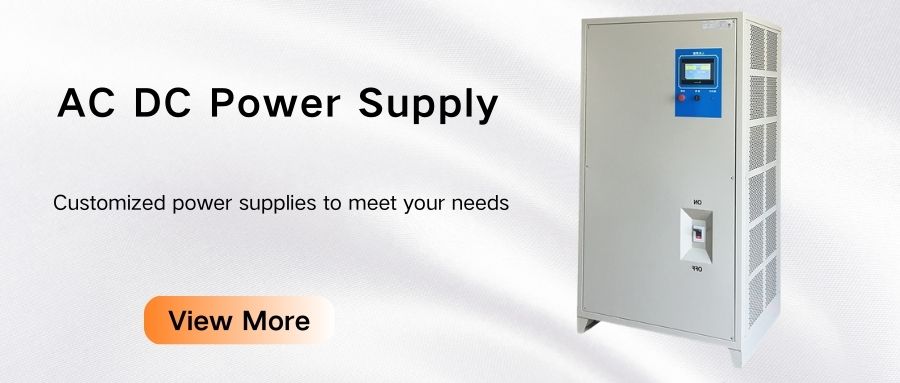
In the light metal surface treatment industry, ordinary anodizing is well-known, while micro-arc oxidation as a branch of special anodizing is rarely understood. It is not a simple upgrade of conventional anodizing, but a special process that forms ceramic protective films on aluminum, magnesium and titanium alloy surfaces relying on high-voltage plasma discharge. Ordinary anodizing only needs a fixed-parameter power supply, while micro-arc oxidation is fully supported by adjustable power supplies. Only with the dynamic parameter adjustment of adjustable power supplies can the micro-arc reaction be stably stimulated to generate dense and high-hardness oxide films.
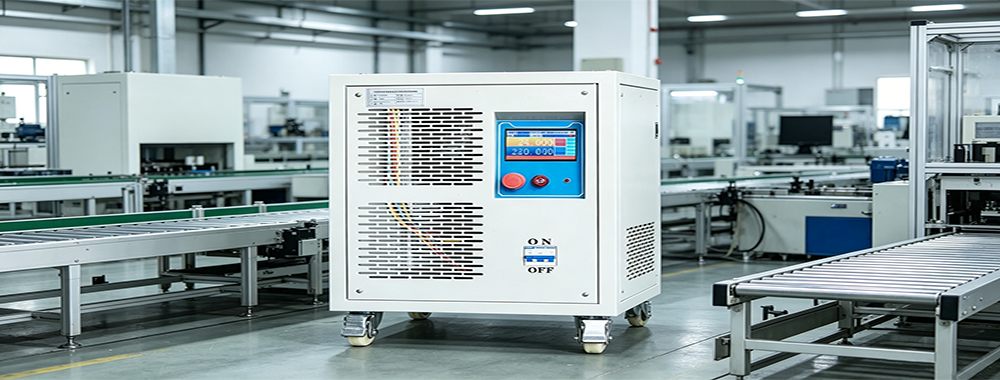
The hardness of micro-arc oxidation films can easily exceed HV400, even reach above HV1000 in some working conditions, far higher than the conventional limit of HV500 for hard anodizing. It also has excellent corrosion resistance, high temperature resistance and insulation. The realization of all these properties depends on the output accuracy and adjustment range of adjustable power supplies. Slight changes in voltage, current and pulse frequency will directly affect the uniformity and service life of the film.
Adjustable Power Supply: Core Support for Micro-Arc Oxidation
Different from traditional processes, micro-arc oxidation requires a high-voltage environment of hundreds of volts to trigger micro-arc sparks on the surface, and instantaneous high temperature promotes the reaction between the metal matrix and electrolyte to form films. This special reaction cannot be realized by ordinary regulated power supplies, and professional adjustable power supplies must be equipped to realize free switching of constant voltage, constant current and pulse modes.
The adjustable power supply can flexibly adjust the voltage amplitude and pulse duty cycle according to the workpiece material, volume and film thickness requirements, adapting to the oxidation logic of different materials such as aluminum alloy and magnesium alloy. In mass production, a stable adjustable power supply can maintain consistent process parameters and avoid problems such as local ablation and uneven film thickness of workpieces. Many domestic power supply manufacturers are deeply engaged in this field. Brands like YIBENYUAN provide reliable equipment support for small and medium-batch processing of micro-arc oxidation with stable parameter adjustment.
Niche and High-Value Practical Applications of Micro-Arc Oxidation
(1) Application of Hydraulic and Pneumatic Precision Components
High-pressure valve bodies, wear-resistant shaft sleeves, small cylinders and other components are long-term exposed to oil friction and pressure impact, and ordinary surface treatment is easy to wear and fall off. Adopting micro-arc oxidation process, combined with adjustable power supply to reduce current density and optimize pulse parameters, the generated ceramic film is oil and wear resistant, which can greatly reduce component loss and extend equipment operation and maintenance cycle, suitable for supporting parts of industrial automation equipment.
(2) Application of Special Structural Parts for Textile Machinery
Yarn guide parts, high-speed rollers and needle cylinder accessories of textile machinery operate with high-frequency reciprocating friction for a long time, requiring extremely high surface smoothness and wear resistance. Micro-arc oxidation accurately controls the film forming speed through adjustable power supplies, forming a delicate and hard protective layer on the workpiece surface, which will not scratch textile fabrics and can resist long-term friction loss, adapting to the uninterrupted production needs of the textile industry.
(3) Application of Precision Instruments and Optical Accessories
Precision parts such as optical lens barrels, instrument heat dissipation bases and testing equipment shells have strict requirements on dimensional accuracy, insulation and heat dissipation. With the adjustable power supply gently regulating output parameters, micro-arc oxidation slowly generates thin film layers to avoid high-temperature deformation of workpieces. Meanwhile, the film has good infrared heat dissipation and insulation capabilities, suitable for niche precision fields such as laboratories and industrial testing.
(4) Application of Outdoor Special Industrial Equipment
Different from the popular consumer electronics field, micro-arc oxidation is mostly applied to outdoor industrial terminals, small ship accessories, plateau equipment brackets and other scenarios. Such scenarios are featured by humid salt fog environments. By adjusting high-voltage parameters through adjustable power supplies, micro-arc oxidation generates thick and dense oxide films, which can resist salt fog corrosion and temperature aging for a long time, meeting the long-term use needs of complex outdoor working conditions.
Summary of Industry Development Trends
As a core category of special anodizing, micro-arc oxidation does not follow the mass surface treatment track, but is irreplaceable in various niche precision industrial fields. As the core hardware of the process, the regulation performance and stability of adjustable power supplies directly determine the process upper limit of micro-arc oxidation. With the increasing application of lightweight metal materials and the continuous iteration of adjustable power supply technology, micro-arc oxidation will continue to penetrate more subdivided industries and become a preferred solution for surface treatment of high-end precision components.