In the precision metal surface treatment industry, the plasma polishing power supply serves as core equipment that determines polishing quality, processing efficiency, and operational stability. The power configuration of a plasma polishing power supply directly affects surface treatment results, single-batch capacity, and overall production line output. Many users tend to mistakenly believe that higher power is always better, ignoring the matching relationship between workpiece size, structural characteristics, material properties, actual production volume, leading to low equipment utilization, excessive energy consumption, or unstable polishing effects. This article focuses on the 20–400kW power range of plasma polishing power supplies, explaining how to scientifically match workpiece size and production capacity for practical manufacturing reference.
Matching Logic Between Plasma Polishing Power Supply and Workpiece Size
The output power of a plasma polishing power supply defines the energy density of the plasma field, which directly influences the removal rate and uniformity of microscopic protrusions on workpiece surfaces. Larger workpieces with greater effective treatment areas require higher power from the plasma polishing power supply to ensure sufficient electric field coverage, stable gas film formation, and consistent polishing.
Small precision parts, such as mini hardware, fasteners, and small structural components with moderate single-tank loading, usually can meet requirements with a 20–60kW plasma polishing power supply. Plasma polishing power supplies in this range feature compact size and reasonable energy consumption, suitable for small-batch, high-precision, multi-variable production scenarios without resource waste from excess power.
Medium-sized workpieces, including sanitary hardware, decorative parts, and medium structural components with increased treatment area and load, are recommended to use an 80–150kW plasma polishing power supply. This range delivers stable output, balancing processing speed and surface quality, adapting to most standard mass production lines with balanced efficiency and cost.
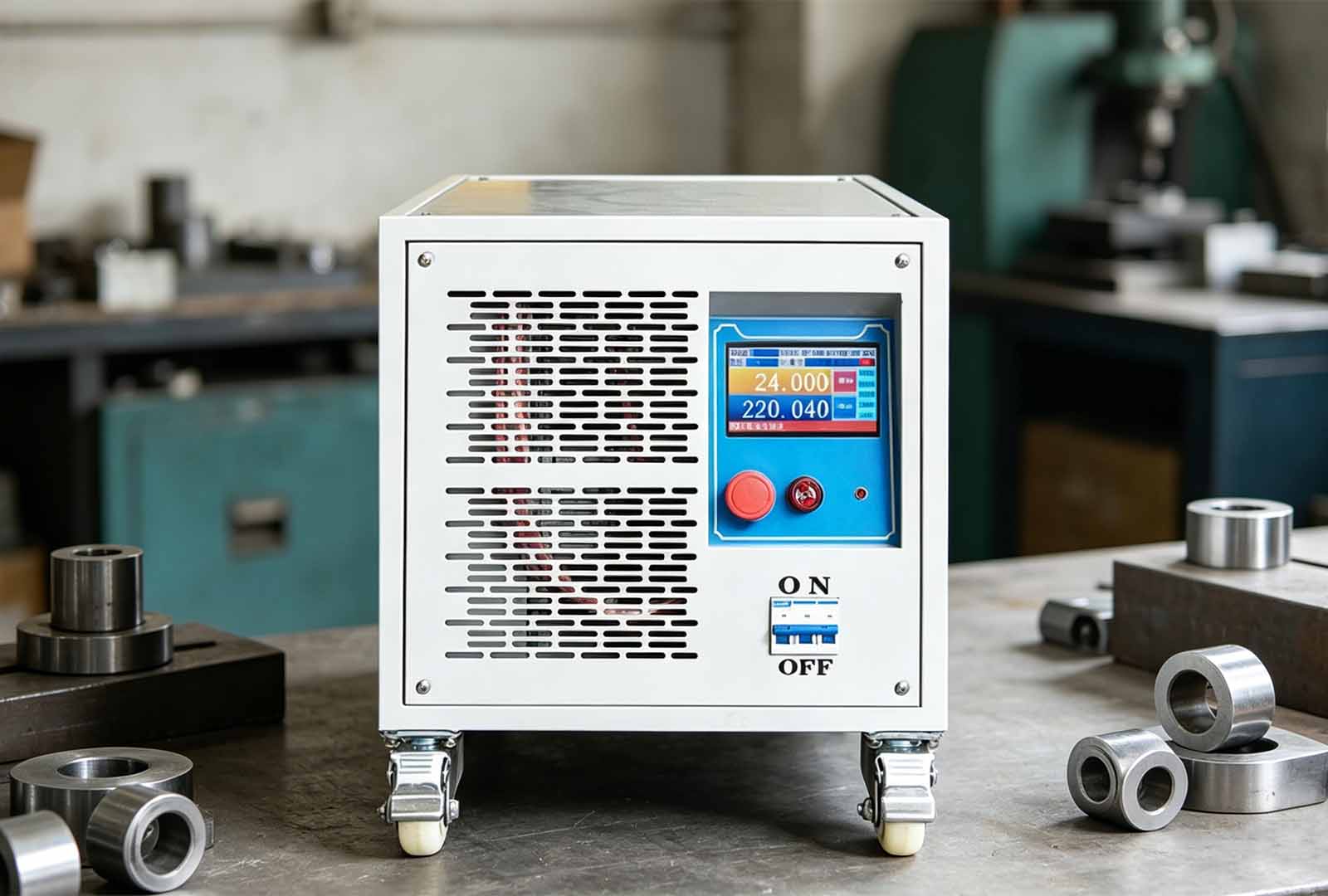
Large workpieces with large surface areas, such as big sanitary products, thick stainless steel parts, and large cavity components, must use a 200–400kW high-power plasma polishing power supply. High-power models provide sufficient energy output to ensure stable plasma fields in deep grooves, dead corners, and large flat areas, avoiding uneven polishing, long processing times, and low yield caused by insufficient power.
Rational Matching of Plasma Polishing Power Supply Power and Production Capacity
Capacity planning is critical for selecting a plasma polishing power supply. Power configuration must match daily output, single-tank processing time, and automation level to achieve full-load efficient operation.
For small-batch trial production and precision processing with low daily output and high added value, priority is given to 20–60kW plasma polishing power supplies. Such configurations feature quick startup, low energy consumption, and convenient debugging, suitable for sample making and small-batch orders, ensuring polishing accuracy while controlling operating costs.
For medium-batch standardized production pursuing balanced efficiency and stability, an 80–150kW plasma polishing power supply is recommended. This range supports continuous stable operation, shortens single-batch cycles, improves hourly output, and fits stable-order mass production.
For large-scale continuous production lines in sanitary ware, kitchenware, and hardware products, 200–400kW plasma polishing power supplies are required. High-power models support large tanks and high loading capacity, greatly enhancing overall productivity with automated loading/unloading, reducing unit energy consumption and labor costs for high-intensity continuous production.
Practical Suggestions for Plasma Polishing Power Supply Selection
Actual selection should not only focus on power values but also comprehensively consider workpiece material, structural complexity, polishing requirements, and on-site working conditions. Workpieces with complex structures, multiple inner holes, and dead corners need appropriately increased power reserve in the plasma polishing power supply to ensure uniform energy coverage. Workpieces requiring high mirror finish need stable-output, low-ripple plasma polishing power supplies to avoid surface quality issues from power fluctuations.
In the industrial surface treatment sector, YIBENYUAN provides reliable plasma polishing power supplies in various power ranges, adapting to diverse workpiece sizes and capacity requirements with reasonable power configuration solutions.
Reasonably matching plasma polishing power supply power with workpiece size and production capacity ensures polishing quality, production efficiency, reduces energy consumption, and extends equipment service life. Users should select suitable plasma polishing power supplies based on product characteristics and production plans to achieve stable and efficient plasma polishing production.