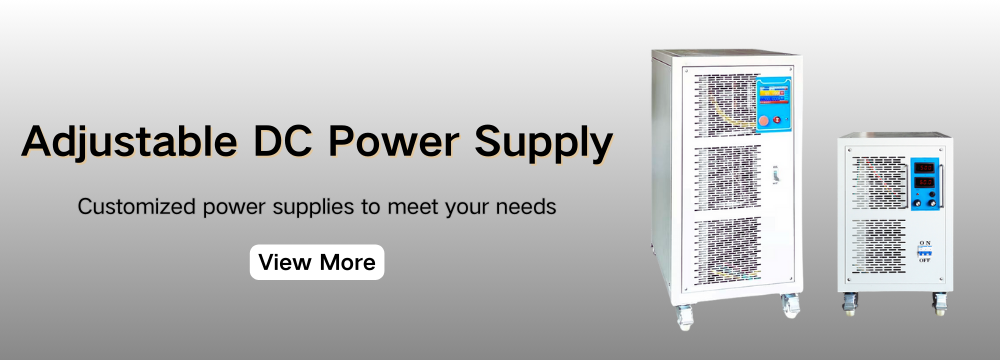
In environmental protection processes such as electrolytic water treatment, electrocoagulation, electrochemical oxidation, and electrolytic disinfection, DC power supplies serve as the core equipment driving electrochemical reactions. To cut costs, many small and medium-sized water treatment projects attempt to substitute specialized, adjustable water treatment power supplies with standard DC power supplies. Though both generic and dedicated units are capable of supplying DC power to sustain electrolytic cell operation, vast differences emerge when comparing core process logic, running stability, treatment performance, electrode service life and long‑term economic efficiency. Under no circumstances can ordinary general‑purpose power supplies take the place of professional water treatment power equipment. Blind replacement will inevitably trigger a string of operational issues: non-compliant discharge water, frequent equipment faults, and a sharp rise in daily operation and maintenance expenses.
I. Limited Control Performance: Poor Adaptability to Variable Water Quality Conditions
Electrolytic water treatment relies on dynamic electrochemical responses. Fluctuations in raw water conductivity, contaminant density, temperature and pH value constantly alter the load impedance of electrolytic tanks.Tailored adjustable power supplies for water treatment enable smooth switching between constant voltage and constant current modes. They fine-tune output parameters in real time to match shifting water quality, stabilizing current density and sustaining steady oxidation, flocculation and disinfection reactions throughout the treatment process.
Conversely, general‑purpose power supplies mostly offer fixed output or basic adjustment functions, paired with low control accuracy and a narrow regulation range. When water impedance changes occur, notable voltage and current drift will arise, triggering violent swings in reaction intensity. Insufficient reaction strength often results in incomplete pollutant breakdown, while unexpected current overloads intensify undesirable side reactions.In the long run, unstable treatment efficiency undermines effluent consistency, making it difficult to maintain stable compliance with discharge regulations.
II. Poor Output Stability: Compromising Water Treatment Purification Efficiency
The core of electrolytic water treatment lies in stable current density: the smaller the current fluctuation, the more uniform the electrochemical plating reactions, ion decomposition, and flocculation effects will be. Specialized water treatment power supplies incorporate high-frequency rectification and digital closed-loop control systems, providing low-ripple, smooth power output. Even during long-term full-load operation, they exhibit no parameter drift, perfectly adapting to the continuous, long-duration operational requirements of electrolytic cells.
By contrast, general-purpose industrial power supplies lack targeted filtering and voltage regulation designs, resulting in significant output ripple and noticeable fluctuations in voltage and current. This unstable power delivery disrupts the balance of electrochemical reactions, lowers redox efficiency, and leads to more electrical energy being wasted as heat. Under the same energy consumption, the pollutant removal efficiency of general-purpose power supplies drops sharply—this not only impairs treatment results but also leads to unnecessary electrical energy waste.
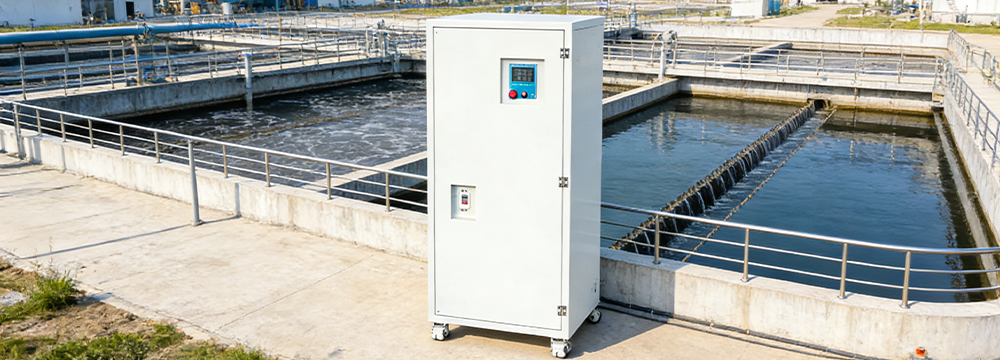
III. Lack of Operational Adaptability: Prone to Rapid Electrode Degradation
Electrodes constitute the core consumable component of electrolytic water treatment systems, entailing high procurement and replacement costs. Current surges and parameter imbalances are the primary triggers for electrode corrosion, passivation, and aging. Power supplies specifically designed for water treatment feature built-in soft-start, gradual voltage ramp-up, and current/voltage limiting functions. These capabilities prevent instantaneous current surges upon startup from damaging the electrodes, while simultaneously allowing for precise control of load intensity based on process requirements, thereby retarding the rate of electrode passivation and corrosion and effectively extending electrode service life. Standard power supplies lack a soft-start design, resulting in severe current surges at startup and an inability to precisely limit current flow. Under long-term operation, electrodes become highly susceptible to issues such as oxidative blackening, scale accumulation on plates, and localized perforation. This leads to a drastic increase in replacement frequency; while seemingly saving money in the short term, it ultimately results in higher long-term operation and maintenance costs.
IV. Insufficient Protection Level: Failure to Withstand Severe Operating
EnvironmentsWater treatment facilities are typically characterized by high humidity, corrosive gases, and high concentrations of acid-alkali mists. As a result, power supplies used in these settings must meet strict requirements for moisture resistance, corrosion resistance, and dustproof performance.
Power supplies specifically designed for water treatment are equipped with "three-proof" conformal coatings, sealed structural designs, and corrosion-resistant components. Tailor-made for humid and corrosive environments, they come with multiple layers of protection—such as overheating protection, overcurrent protection, short-circuit protection, and reverse polarity protection—enabling reliable 24/7 continuous operation.
In contrast, standard power supplies adopt conventional dry-type designs with low protection levels. Their internal circuit boards and power modules are highly susceptible to damage from moisture and corrosion, making them ill-suited for the harsh conditions of water treatment facilities. When deployed in water treatment environments over extended periods, they are prone to failures such as short circuits, component burnout, and accelerated aging. This results in a high equipment failure rate, directly compromising the continuous operation of the water treatment system.
V. Lack of Automation Scalability: Failure to Meet Modern Environmental O&M Requirements
Modern water treatment equipment is increasingly trending toward intelligent and automated operation. Specialized adjustable power supplies support external communication interfaces, segmented timing controls, and remote regulation capabilities. They can be seamlessly integrated into a comprehensive automated control system to enable unattended operation, segmented electrolysis processes, and data logging—thereby fulfilling the requirements for online environmental monitoring and regulatory compliance management. Conventional power supplies are functionally limited; lacking intelligent regulation and data transmission capabilities, they require manual on-site operation, preclude segmented process control, struggle to meet the requirements of high-standard environmental management systems, and hinder future equipment upgrades and retrofits.
In summary, while conventional power supplies may satisfy basic power supply requirements, they fail to accommodate the specific demands inherent in electrolytic water treatment processes. Whether assessed by their parameter adjustment capabilities, output stability, environmental protection features, electrode protection mechanisms, or intelligent operation and maintenance functions, conventional power supplies exhibit significant shortcomings. While opting for a short-term substitute may appear to save on procurement costs, it introduces a host of latent risks—including substandard water quality, increased energy consumption, accelerated electrode wear, and heightened susceptibility to equipment damage. In the field of water treatment engineering, a dedicated and adjustable DC power supply is not just an optional accessory, but an indispensable necessity. Only by configuring specialized power supply equipment can we ensure the stable and efficient operation of the water treatment system, thereby achieving an optimal balance among treatment effect, operational cost and long-term safety.
Please do not hesitate to contact us.!