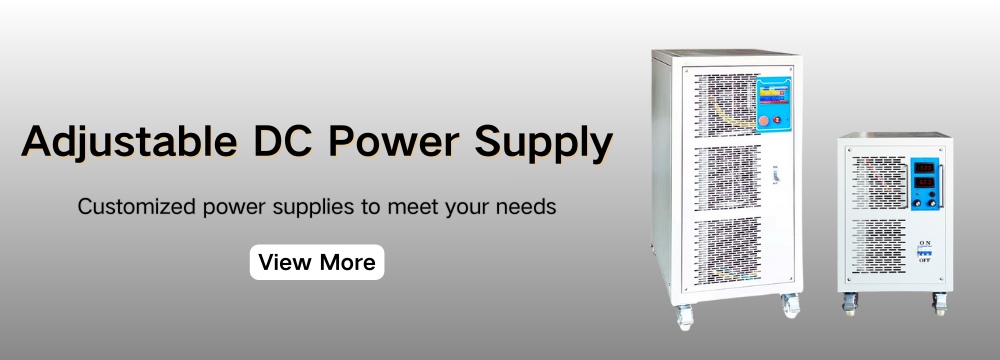
In industrial wastewater, municipal sewage and electrochemical water treatment, IGBT power supplies have become the mainstream solution. Compared with traditional silicon-controlled rectifiers, MOSFETs and other devices, IGBT power supplies are more suitable for complex working conditions in terms of stability, energy efficiency, control accuracy and long-term operation cost, making them the preferred choice for practical engineering applications.
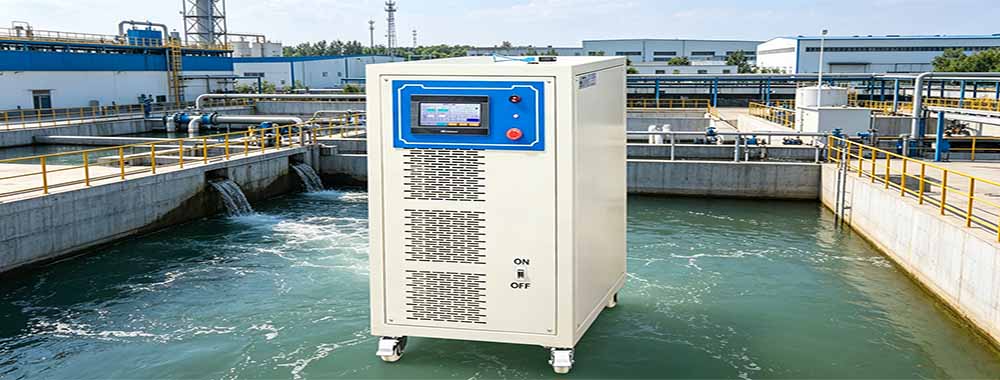
Special Requirements of Water Treatment Conditions
Water treatment mostly adopts processes such as electrocoagulation, electrocatalysis and electrolytic oxidation. The loads are usually electrolyte environments with strong corrosiveness, easy passivation and large current fluctuations, which impose clear requirements on power supplies: stable high-current output, fast adjustable pulse parameters, suppressed electrode passivation, long-term reliable operation, and lower energy consumption. Ordinary power supplies can hardly meet the needs of high-current bearing, fast response and wide-range adjustment, while IGBT power supplies are highly compatible with these requirements.
Core Reasons Why IGBT Power Supplies Are Suitable for Water Treatment
IGBT features both high-voltage and high-current carrying capacity and fast switching speed, making it ideal for medium-to-high power and medium-to-high frequency pulse scenarios in water treatment. IGBT power supplies can stably output constant-current, constant-voltage or pulse waveforms, accurately matching the rhythm of electrochemical reactions, and improving the efficiency of organic degradation, heavy metal removal and flocculation precipitation.
Electrode scaling and passivation are common problems in water treatment, leading to reduced efficiency and accelerated plate loss. IGBT power supplies support pulse commutation, periodic polarity reversal and dynamic parameter adjustment, which effectively alleviate electrode passivation, prolong service life and reduce maintenance and consumable costs.
IGBT power supplies feature higher conversion efficiency and lower heat generation, achieving obvious power-saving effects compared with traditional rectifiers during long-term continuous operation, in line with the cost reduction and low-carbon operation goals of sewage treatment plants. Their fast response control loops adapt quickly to changes in water quality, concentration and flow, maintaining stable output and improving treatment consistency and compliance rate.
Typical Value of IGBT Power Supplies in Water Treatment
IGBT power supplies allow flexible setting of pulse width, frequency and duty ratio, strengthening the generation of active substances such as hydroxyl radicals, enhancing the treatment effect of refractory organics, and realizing more stable reduction of COD and chroma.
Equipped with complete protection against overcurrent, overvoltage, overheating and short circuit, the equipment has a lower failure rate in humid and highly corrosive sites, suitable for long-term uninterrupted operation. The modular design facilitates capacity expansion and maintenance, meeting different power demands from small and medium-sized treatment stations to large-scale industrial park wastewater projects.
In practical projects, IGBT power supplies deliver better overall cost-effectiveness. They save power, reduce chemical dosing, extend electrode life, and significantly lower comprehensive operation expenses, making them a cost-effective choice for water treatment engineering. Brands such as YIBENYUAN have also launched dedicated IGBT power solutions for water treatment to further improve equipment adaptability.
Summary
IGBT is more commonly used in water treatment because it achieves the best balance among high current, high voltage, control accuracy, reliability and energy consumption. IGBT power supplies stably support key processes such as electrocoagulation, electrocatalysis and electrolytic oxidation, improving treatment efficiency, reducing operation costs and extending equipment life, serving as an ideal power core for electrochemical water treatment systems.