In high-salinity wastewater treatment, the output characteristics of the power supply directly determine the stability and energy efficiency of electrolysis, electrocoagulation, electrocatalysis, and other processes. Matching the parameters of DC power supplies and AC-DC combined power supplies is critical to ensuring treatment efficiency, reducing energy consumption, and extending electrode life. Properly matching the voltage, current, waveform, protection logic, and communication interface of the power supply enables the high-salinity wastewater treatment system to operate stably for a long time and adapt to complex water quality and working conditions.
1. Basic Matching of Core Power Supply Parameters
The voltage level of the power supply should be determined comprehensively by the electrolytic cell structure, electrode spacing, and electrolyte conductivity. High-salinity wastewater has high ion concentration and strong electrical conductivity, so low-voltage and high-current DC power supplies are usually selected, with a voltage range of 12V–60V. The current is configured from hundreds to thousands of amperes according to the treatment scale to avoid side reactions and increased energy consumption caused by excessive voltage. In the AC-DC superposition mode, the AC component of the power supply is used to suppress concentration polarization and electrode scaling, and its amplitude and frequency must be coordinated with the DC base value to ensure the balance of ion migration and reaction rate.
The current density of the power supply is a core control index and should be set according to water quality and process requirements. Electrocatalytic oxidation should adopt medium current density, while electrocoagulation focuses on stable high-current output. The power supply should support constant-voltage and constant-current dual-mode switching to ensure stable output during load fluctuations, control the ripple coefficient at a low level, and improve reaction uniformity.
2. Adaptation Logic of DC Power Supply and AC-DC Combination
Pure DC power supplies are suitable for continuous and stable processes such as electrolytic reduction and heavy metal deposition, with flat output and fast response, suitable for scenarios with single waveform requirements. AC-DC combined power supplies superimpose controllable AC components on the basis of DC, enhance mass transfer, and reduce passivation, making them suitable for high-salinity, easy-scaling, and refractory wastewater treatment. The switching logic and timing of the power supply must be synchronized with the reactor operating cycle to avoid efficiency degradation caused by waveform conflicts.
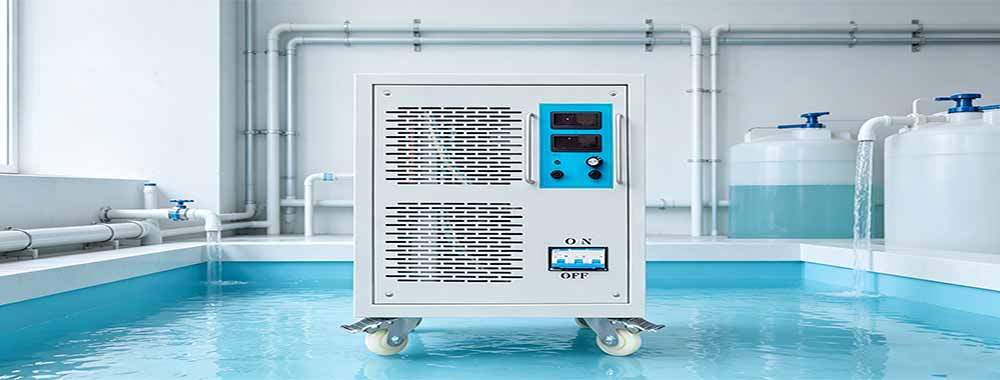
The power capacity of the power supply reserves redundancy according to peak load, taking into account heat dissipation and protection level. The high-salinity working condition is humid and corrosive, so the cooling method and protection level of the power supply must match the on-site environment to ensure long-term reliable operation.
3. Matching of Power Supply Protection and Control Interfaces
The safety protection of the power supply directly affects the system life. Multiple protections such as overvoltage, overcurrent, short circuit, over temperature, phase loss, and reverse connection must be configured to quickly cut off the output and alarm when a fault occurs, preventing damage to electrodes and the power supply. AC-DC combined power supplies also need to add abnormal waveform protection to improve operational safety.
The control interface of the power supply supports remote monitoring and parameter adjustment, and can be connected to a host computer for automatic parameter adjustment to adapt to water quality fluctuations and load changes. Digital control makes the power output more precise, facilitating process optimization and energy consumption management.
4. Engineering Selection and Brand Adaptation Suggestions
In actual projects, first determine the process route and reactor parameters, then calculate the voltage, current, power, and waveform requirements of the power supply, and give priority to industrial-grade power supplies with stable output, complete protection, and strong adaptability. The YIBENYUAN series power supplies have good stability and adjustability in water treatment scenarios, and can meet the power supply requirements of high-salinity wastewater treatment in multiple scenarios.
Parameter matching of the power supply is the core link of electrochemical treatment of high-salinity wastewater. Scientific selection and fine debugging can significantly improve treatment effects, reduce operating costs, and provide solid support for stable compliance and long-term operation.